
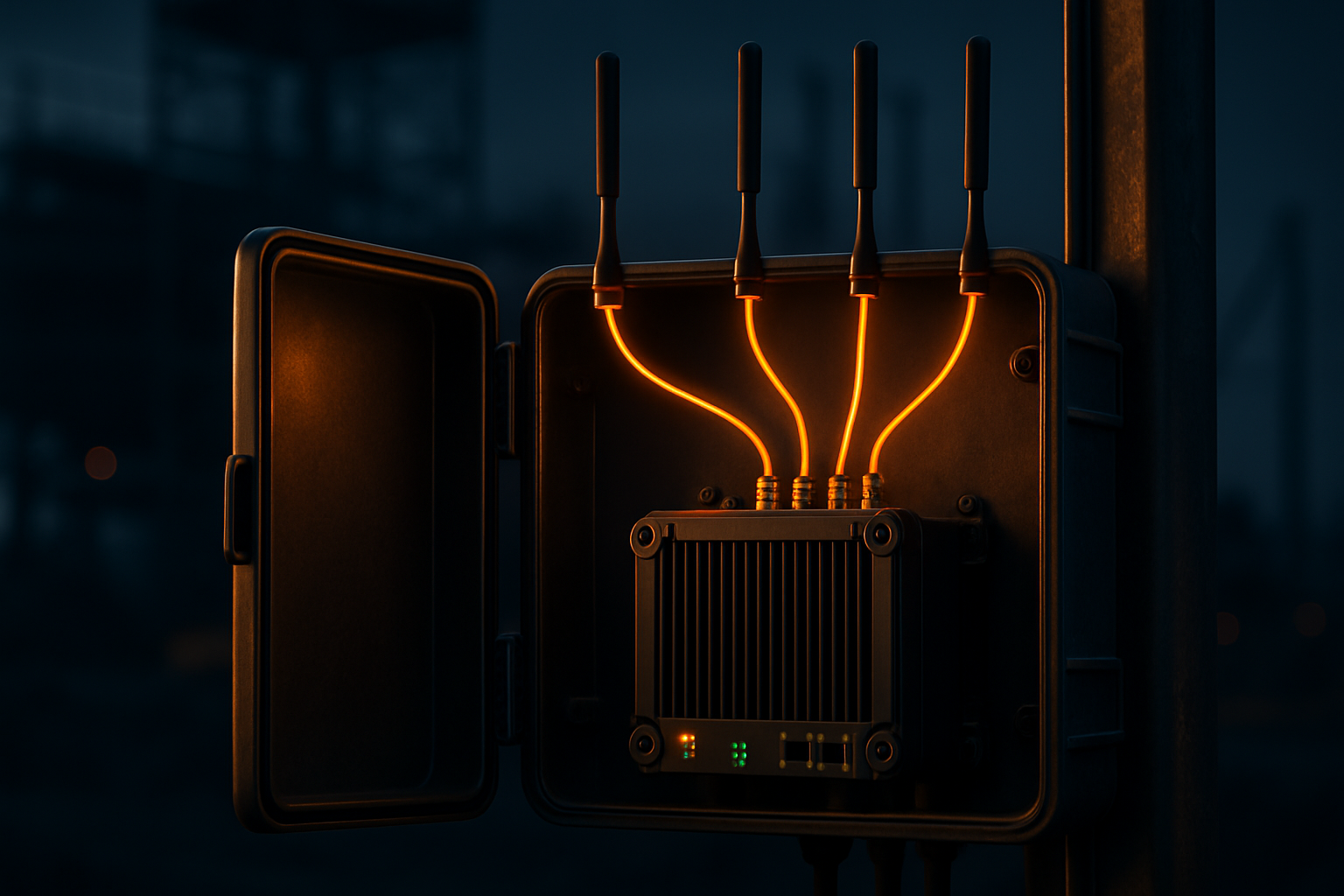
On a jobsite, “we have a backup connection” sounds like a plan. Then the primary drops, the backup takes thirty seconds to come up, sessions reset, the POS reboots, the cameras blink offline — and you learn that a backup is not the same as continuity.
The problem with the standby model
Failover keeps a second link idle and switches to it after a failure. That switch is a visible outage, and the standby link is money spent to sit idle. Worse, standby links are the ones nobody tests — so you discover it was misconfigured at the exact moment you needed it.
Bond instead
SpeedFusion bonding runs every link at once. Two carriers plus a wired drop are one combined pipe; if any member drops, the others were already carrying the traffic. No switch, no gap, and you get the combined throughput every day instead of paying for an idle spare. For anything mission-critical — payments, access control, safety systems — that is the difference between an incident and a shrug.
And remember the one rule that turns a good design into a reliable one: every new WAN you add must be enrolled in the SpeedFusion tunnel. A link that is plugged in but not in the bond does nothing when the primary fails.
If your disaster-recovery plan includes the word “failover,” you’re doing it wrong.
SpeedFusion internet bonding means increased performance, more uptime, and no failover — because the session was already riding every link.
Own your network. Peplink hardware is bought once and it lasts — it keeps bonding and routing with or without an active warranty or the cloud. No forced subscriptions, no required licenses.
Learn the fundamentals at connectivity101.com.
Leave a Reply